
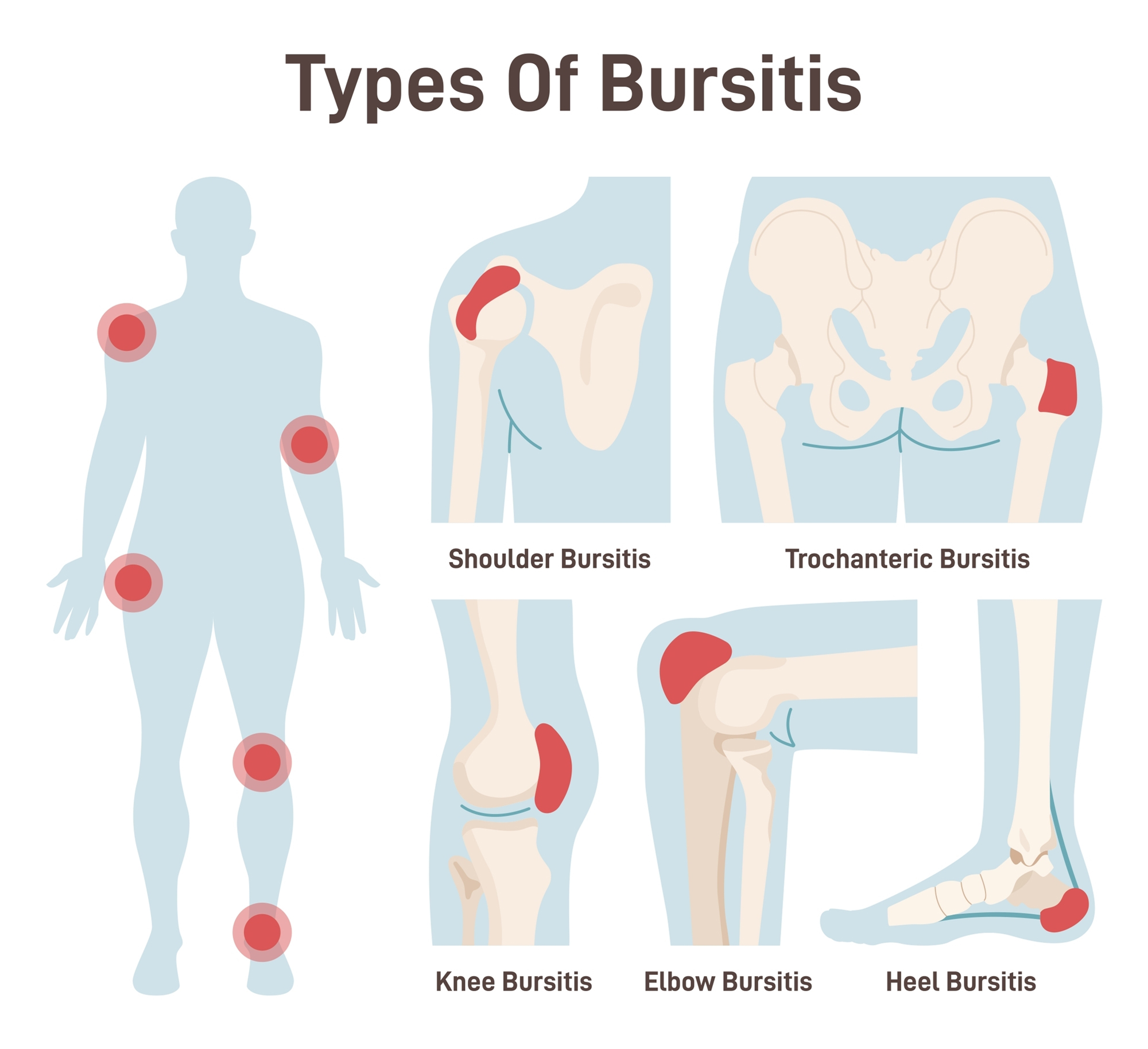
Bursae are small, fluid-filled sacs that provide cushioning where bones, tendons, and muscles move against one another. When a bursa becomes irritated or inflamed—a condition known as bursitis—it can cause pain, tenderness, swelling, and discomfort with movement.
Bursa injections deliver medication directly to the affected area to reduce inflammation and relieve pain, helping make movement and everyday activities more comfortable.

How Do Bursa Injections Work?
A bursa injection typically combines a corticosteroid with a local anesthetic. The local anesthetic can provide more immediate, temporary relief, while the corticosteroid works to reduce inflammation in the affected bursa.
Depending on the location being treated, ultrasound guidance may be used to accurately place the medication and visualize the surrounding tendons and other structures.
What Can Bursa Injections Help Treat?
Bursitis can affect several areas of the body, with injections commonly used for painful bursae around the shoulder and hip. Symptoms may develop gradually from repetitive movement or overuse, or occur alongside other musculoskeletal conditions.
Before recommending an injection, your physician will evaluate the area to determine whether the bursa is the likely source of your pain and rule out conditions that may require a different treatment approach.


What to Expect
Bursa injections are performed in the office and generally take only a few minutes. Some temporary soreness or irritation around the injection site may occur afterward.
As inflammation improves, patients may experience less pain and greater comfort with movement. How much relief an injection provides and how long it lasts can vary depending on the condition being treated.
Supporting Your Recovery
Reducing pain and inflammation can make it easier to return to exercise, physical therapy, and everyday movement. When appropriate, a bursa injection may be combined with rehabilitation or other non-operative treatments to address the factors contributing to ongoing symptoms.