
Spinal cord stimulation (SCS) is an advanced treatment for certain types of chronic nerve-related pain that have not improved enough with other treatments. It is commonly considered for patients with persistent back and leg pain following spine surgery.
SCS uses mild electrical impulses to modify pain signals as they travel through the nervous system, with the goal of reducing pain and improving daily function.
How Does Spinal Cord Stimulation Work?
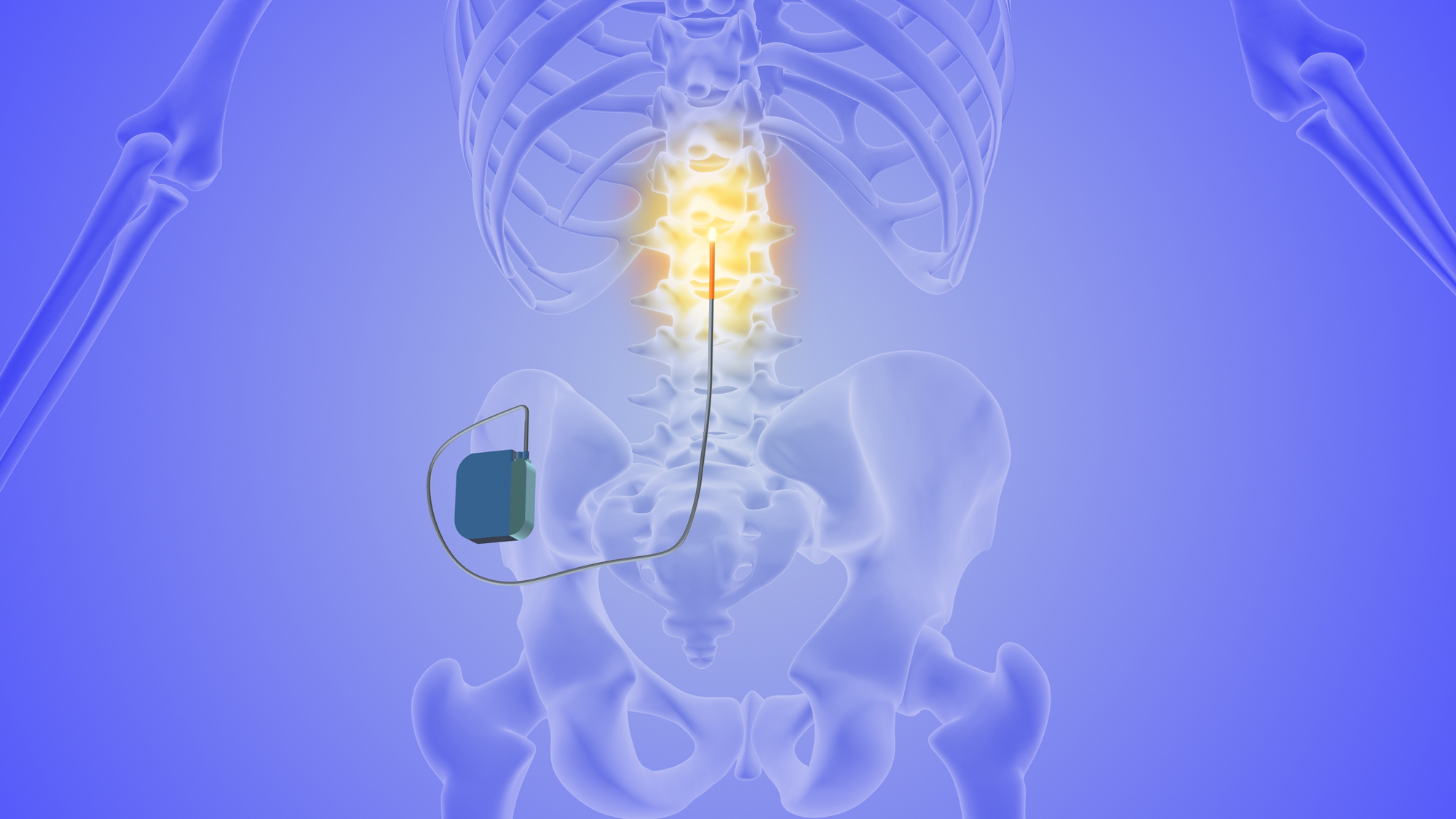
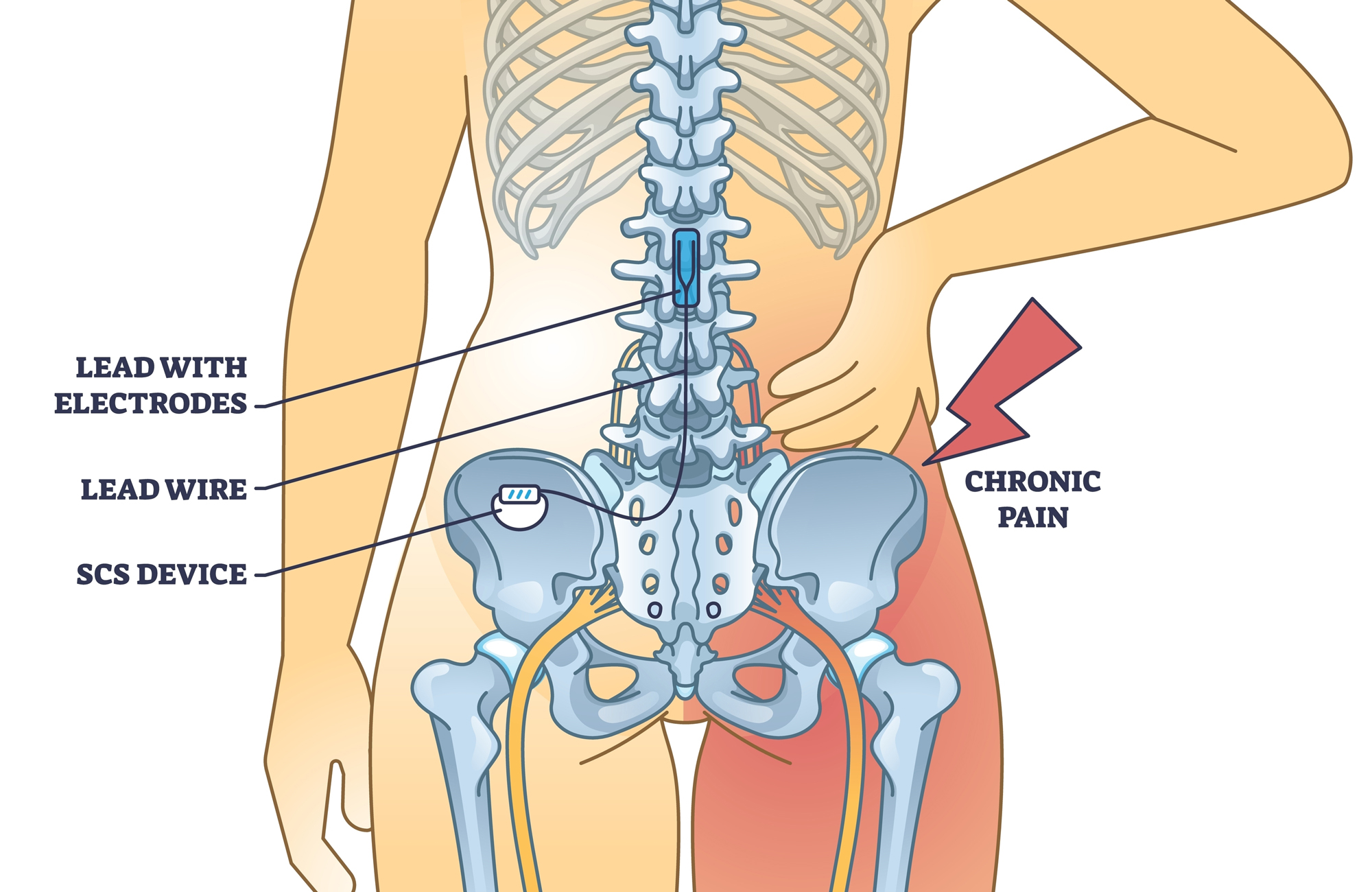
A spinal cord stimulation system uses thin leads placed near the spinal cord to deliver controlled electrical impulses. The stimulation can be programmed and adjusted based on your symptoms and response to treatment.
The Trial Comes First
Before receiving a permanent device, patients first undergo a temporary SCS trial. Temporary leads are placed near the spine and connected to an external device, allowing you to experience the therapy and determine how well it improves your pain and function.
If the trial is successful, you and your physician can decide whether to move forward with permanent implantation.


What to Expect With a Permanent Implant
The permanent system includes leads positioned near the spinal cord and a small pulse generator placed beneath the skin. After implantation, the device is programmed to your individual needs and can be adjusted over time.
Recovery & Risks
After implantation, some soreness around the treatment areas is expected while the incisions heal. Patients are typically given temporary activity restrictions, including limits on bending, twisting, and heavy lifting, to allow the leads and device to heal securely in place.
As with any implanted procedure, SCS carries potential risks. These can include infection, bleeding, movement or damage of the leads, discomfort around the device, or the need for additional treatment or device adjustment. Your physician will review the potential benefits and risks with you before proceeding.
A Personalized Approach to Pain Relief
SCS is intended for carefully selected patients with persistent pain that has not responded adequately to other treatments. The trial period provides an important opportunity to evaluate your individual response before deciding on a permanent device.