
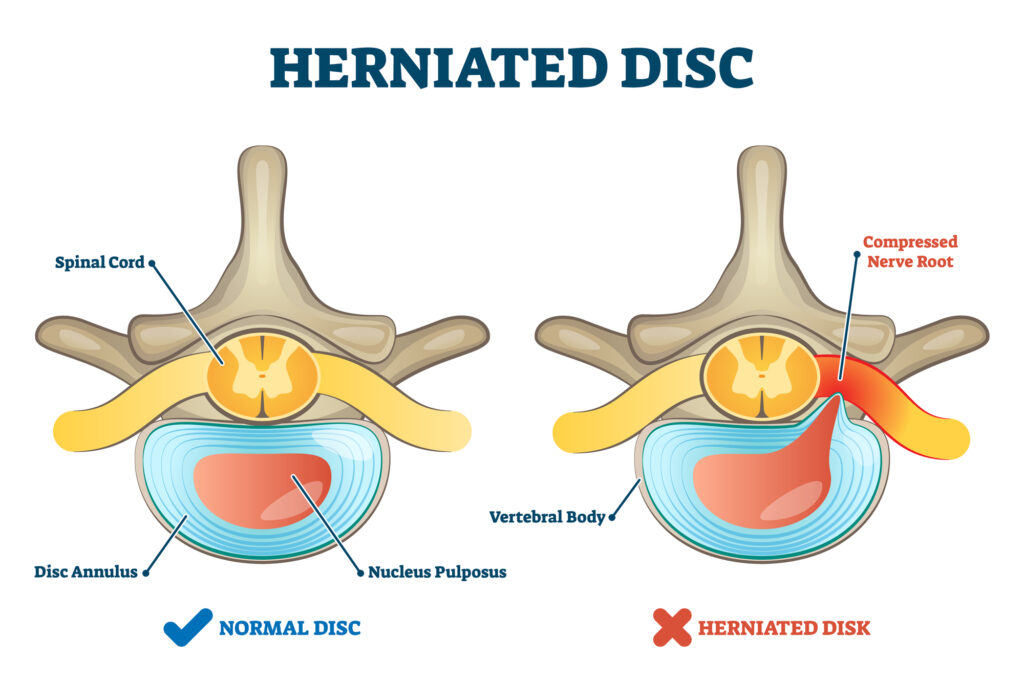
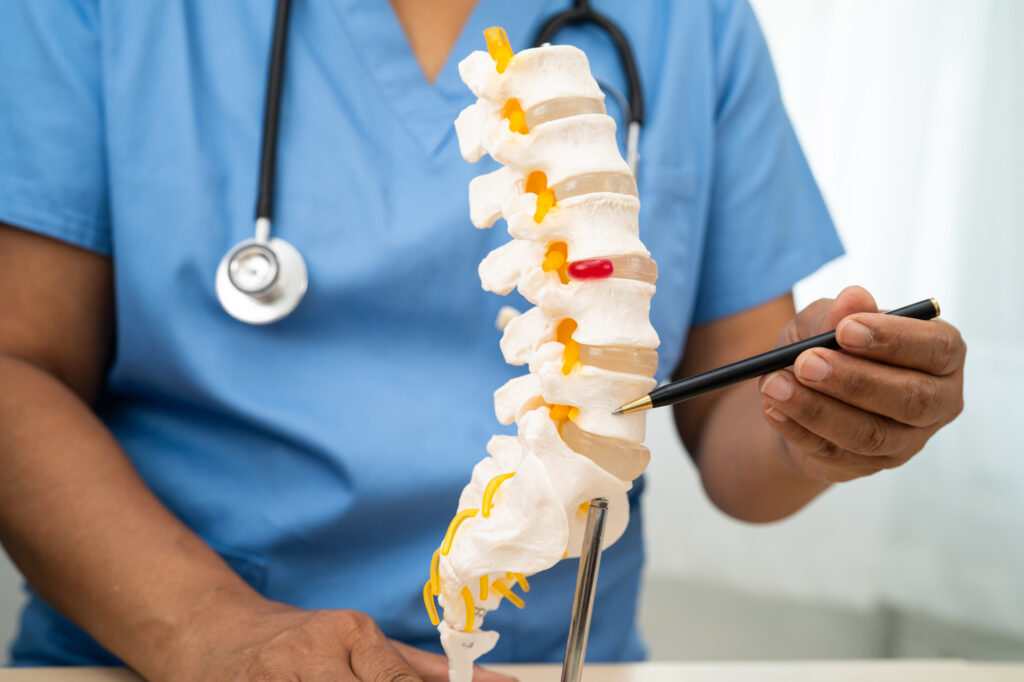
A lumbar herniated disc occurs when the inner portion of a spinal disc pushes through the outer layer, which can irritate or compress nearby nerves. This may lead to lower back pain, sciatica, and symptoms that travel into the leg.
Herniated discs are one of the most common causes of nerve-related leg pain. Patients may also hear terms such as “slipped disc” or “bulging disc.” While these conditions are related, a herniated disc specifically refers to disc material extending beyond its normal space and potentially affecting nearby nerves.
At Fortera Health, we evaluate the entire picture — including your symptoms, physical examination, and imaging findings — to determine the true source of your pain and recommend the most appropriate treatment approach.

Common Symptoms
Symptoms of a lumbar herniated disc may include:
Symptoms can vary depending on the location of the herniated disc and which spinal nerve is affected.
What Causes a Herniated Disc?
A herniated disc can occur when normal age-related changes or stress on the spine weaken the disc and allow the inner material to move outward. Common contributing factors include:
Not every herniated disc causes symptoms. Many people have disc changes on imaging without experiencing pain.
How Is a Herniated Disc Diagnosed?
Diagnosis begins with a discussion of your symptoms, medical history, and a physical examination. Your provider will evaluate your strength, sensation, reflexes, and the pattern of your pain to determine whether a spinal nerve may be involved.
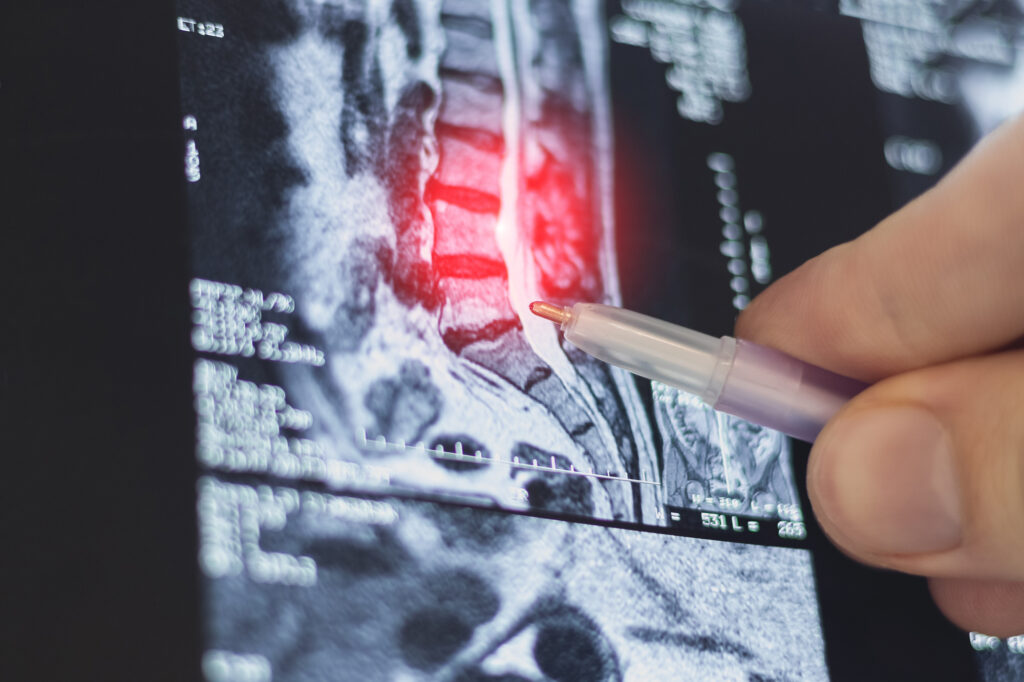
When additional evaluation is needed, imaging studies may include:
Imaging findings are interpreted together with your symptoms and examination because disc abnormalities do not always explain pain by themselves.
Treatment Options
Many patients with lumbar herniated discs improve without surgery. Treatment is based on the severity of symptoms, how long they have been present, and how they affect your daily life.
Options may include:
Most patients can be successfully treated with a conservative approach, while others may benefit from additional interventions when symptoms do not improve.
Whether you are experiencing a new episode of back and leg pain or have been dealing with persistent symptoms, Fortera Health provides a comprehensive evaluation to help identify the cause of your discomfort and guide you toward the treatment option that best fits your needs and goals.