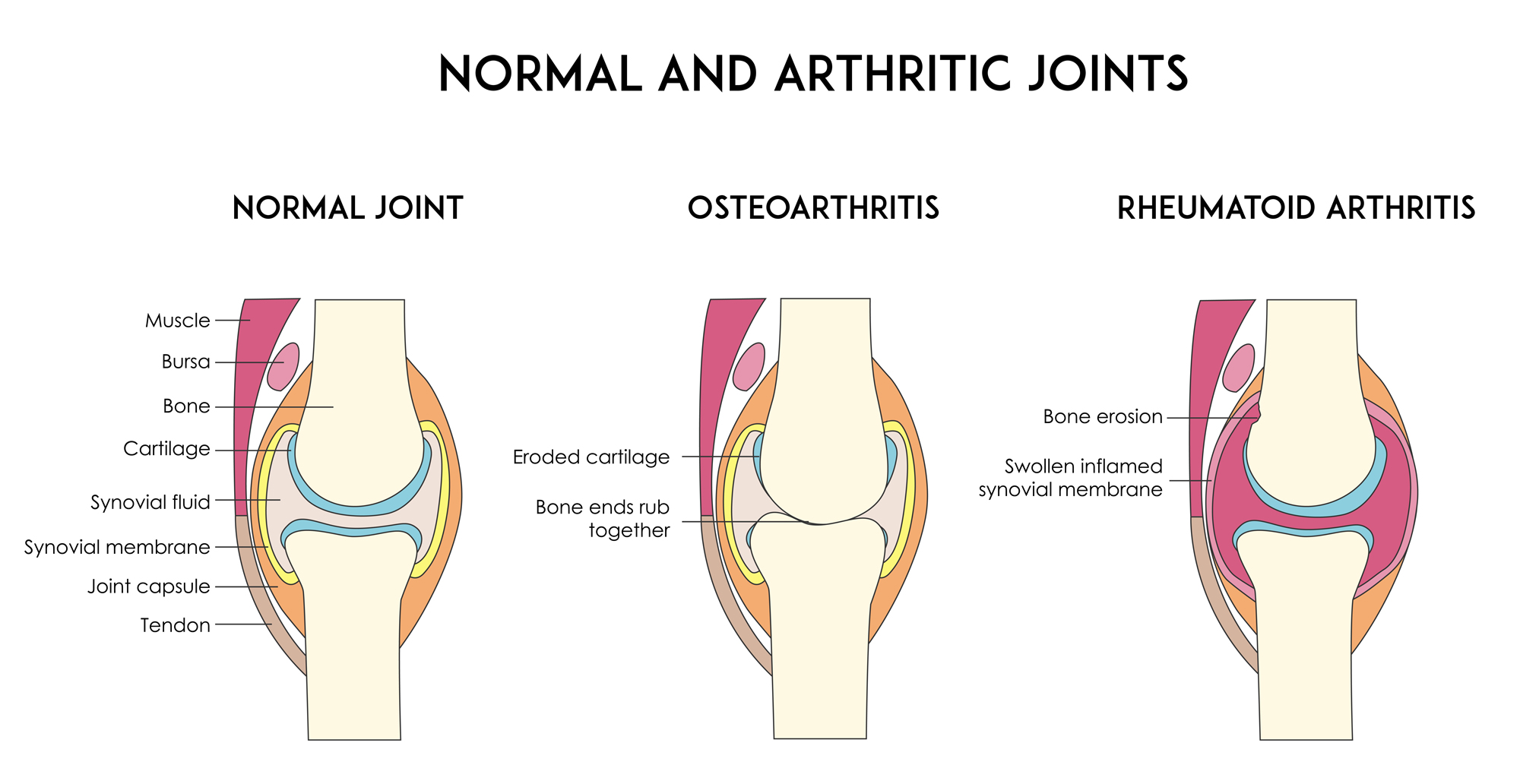
Arthritis-related pain refers to joint pain caused by conditions that affect the joints, surrounding tissues, and the body’s inflammatory processes. While osteoarthritis is the most common form of arthritis, other conditions such as rheumatoid arthritis, psoriatic arthritis, and gout can cause significant pain, stiffness, and loss of function.
Common Symptoms
Symptoms vary depending on the type of arthritis but may include:
Joint pain and tenderness that may worsen with activity or during flare-ups
Stiffness, especially prolonged morning stiffness lasting more than 30 minutes
Swelling, warmth, or redness around affected joints
Reduced range of motion and difficulty performing daily activities
Fatigue or other systemic symptoms in inflammatory forms of arthritis
Certain patterns may provide clues about the underlying condition:
Rheumatoid arthritis: Often affects multiple joints symmetrically and may cause prolonged stiffness, swelling, and fatigue.
Psoriatic arthritis: May be associated with psoriasis, swollen fingers or toes, nail changes, and tendon inflammation.
Gout: Causes sudden, severe attacks of joint pain, swelling, and redness, commonly affecting the big toe.
Why It Happens
Different forms of arthritis develop in different ways:
Inflammatory arthritis occurs when the immune system causes ongoing joint inflammation, which can damage cartilage and bone over time.
Gout occurs when uric acid crystals build up in a joint, triggering inflammation and painful flares.
Degenerative arthritis (osteoarthritis) results from gradual changes within the joint over time.
Diagnosis & Treatment
Diagnosis involves a combination of medical history, physical examination, and targeted testing when needed, including blood work, joint fluid analysis, or imaging.
Treatment depends on the type of arthritis and may include:
Physical therapy and exercise programs
Anti-inflammatory medications
Joint injections for symptom relief
Disease-modifying medications for autoimmune arthritis
Specialized treatments to control gout or inflammatory conditions
Early evaluation and treatment can help reduce pain, protect joint function, and improve quality of life.
At Fortera Health, we focus on identifying the source of joint pain and developing a personalized treatment plan to help patients maintain mobility and independence.