
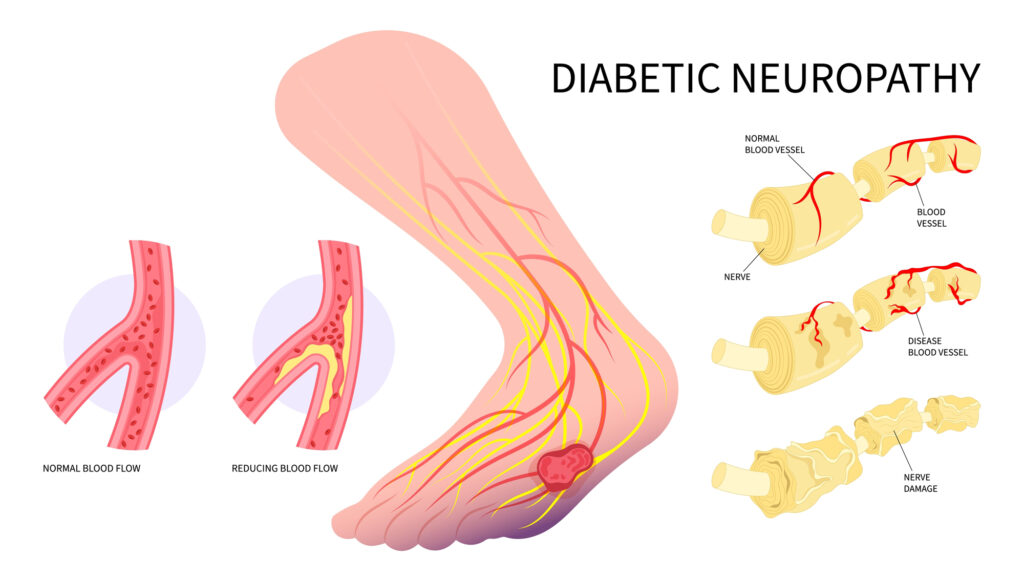
Diabetic peripheral neuropathy is a common complication of diabetes that occurs when high blood sugar levels over time damage the nerves, most often affecting the feet and legs. When this nerve damage causes ongoing discomfort, burning, or painful sensations, it is known as painful diabetic neuropathy.
Diabetic nerve pain can significantly impact sleep, mobility, and quality of life. At Fortera Health, we evaluate the severity and source of your symptoms to help develop a personalized treatment plan focused on reducing pain and improving daily function.

Common Symptoms
Diabetic neuropathy symptoms most commonly begin in the feet and may gradually progress upward. Symptoms may include:
Because neuropathy can reduce sensation in the feet, some patients may not notice injuries, cuts, or irritation, increasing the risk of foot complications.
What Causes Diabetic Neuropathy?
Diabetic neuropathy develops when prolonged high blood sugar levels damage the small blood vessels and nerves that supply sensation throughout the body.
Factors that may increase the risk of developing diabetic nerve pain include:
Over time, nerve damage can affect how the body sends and processes pain signals, leading to persistent symptoms.
How Is Diabetic Neuropathy Diagnosed?
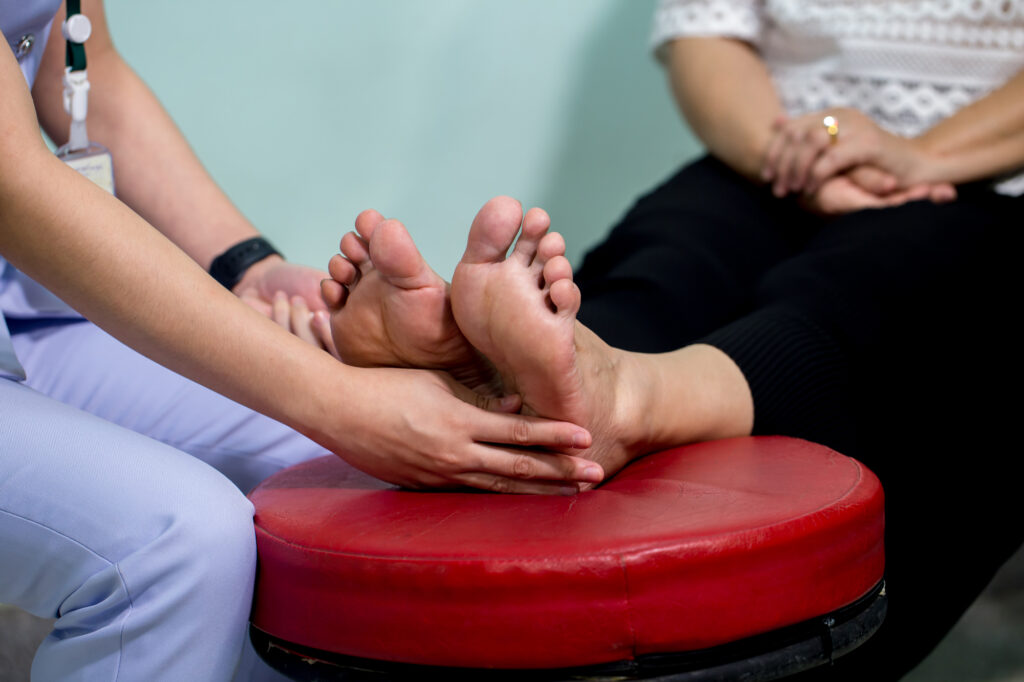
Diagnosis is primarily based on your symptoms, medical history, and a physical examination. Your provider will evaluate sensation, reflexes, strength, and areas of discomfort.
Additional testing may include:
A thorough evaluation is important because numbness, tingling, and nerve pain can have multiple causes.
Treatment Options
Treatment focuses on reducing symptoms, improving function, and preventing complications. Options may include:

For patients with persistent diabetic nerve pain, advanced therapies such as spinal cord stimulation may provide meaningful relief by changing how pain signals are processed by the nervous system.
At Fortera Health, we understand that chronic nerve pain can affect more than just your physical comfort — it can impact sleep, independence, and everyday activities. Our team works with you to identify the right treatment approach to help improve your quality of life and restore function.