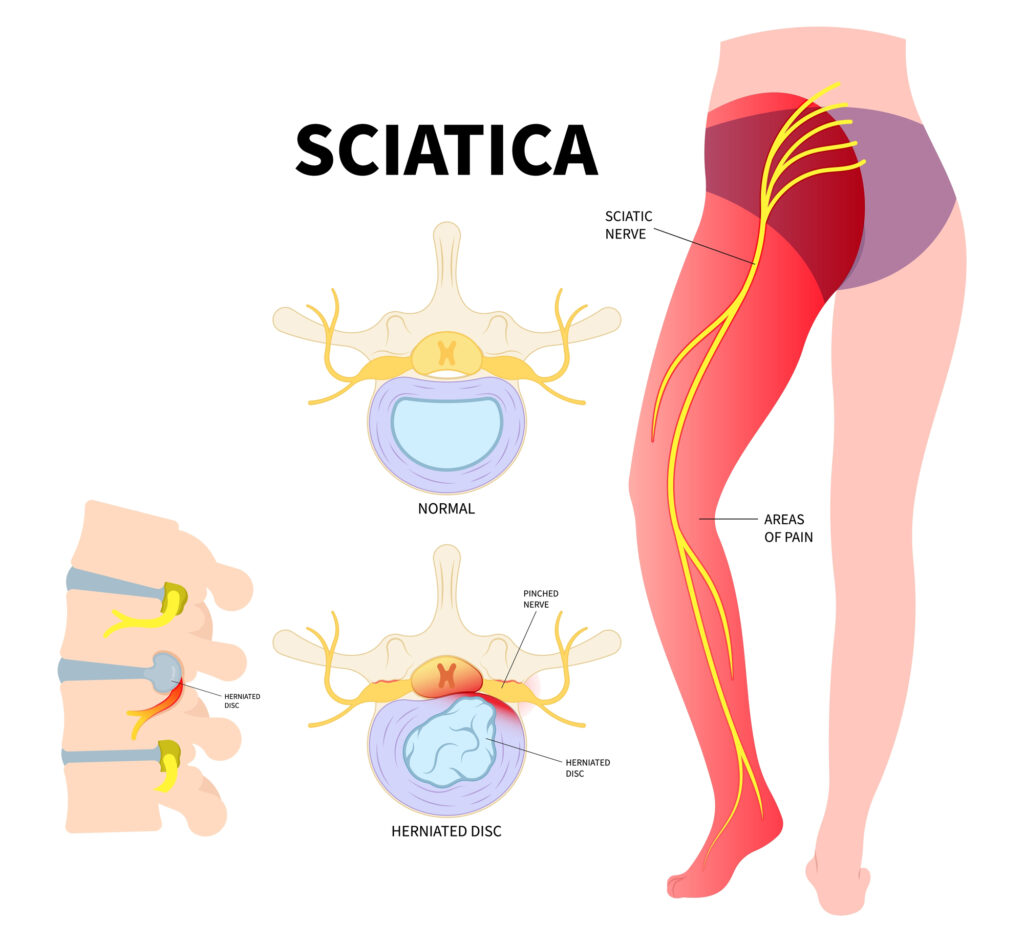
Sciatica refers to pain that travels along the path of the sciatic nerve, typically starting in the lower back or buttock and extending down the back of the leg. It occurs when nerves in the lower spine become irritated or compressed, causing pain, numbness, tingling, or weakness.
The most common causes of sciatica include herniated discs and spinal stenosis, which can place pressure on the nerves that travel into the legs.
At Fortera Health, we evaluate the source of your nerve irritation and how it affects your daily function to create a treatment plan focused on reducing pain and restoring mobility.


Common Symptoms
Sciatica symptoms may include:
Symptoms may occur with or without lower back pain and can vary depending on the severity and location of nerve irritation.
What Causes Sciatica?
Sciatica develops when nerves in the lower spine become inflamed or compressed. Common causes include:
Less commonly, injuries, cysts, or other conditions affecting the spine may contribute to sciatic nerve symptoms.
How Is Sciatica Diagnosed?
Diagnosis begins with a review of your symptoms, medical history, and physical examination. Your provider will evaluate:
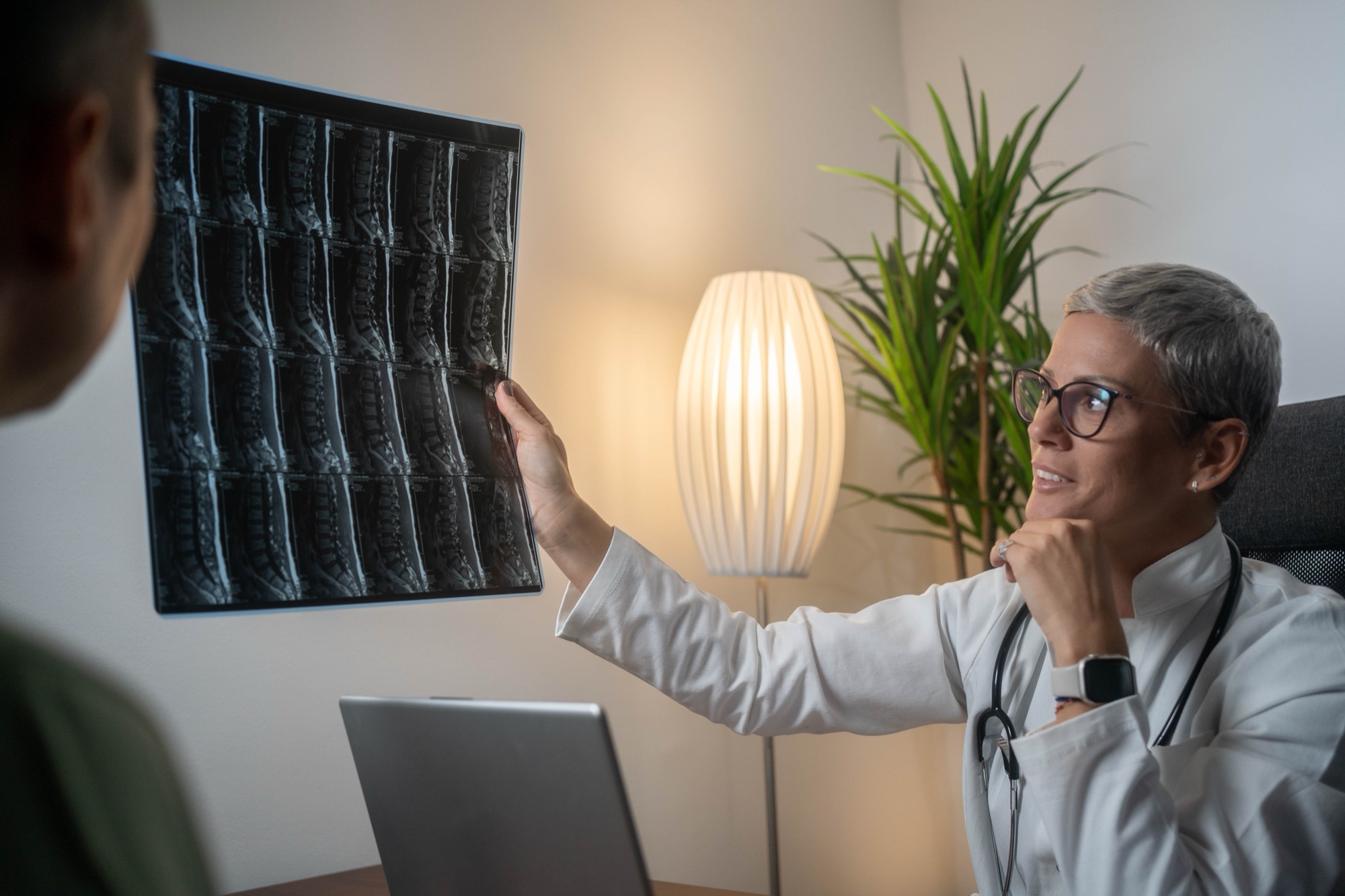
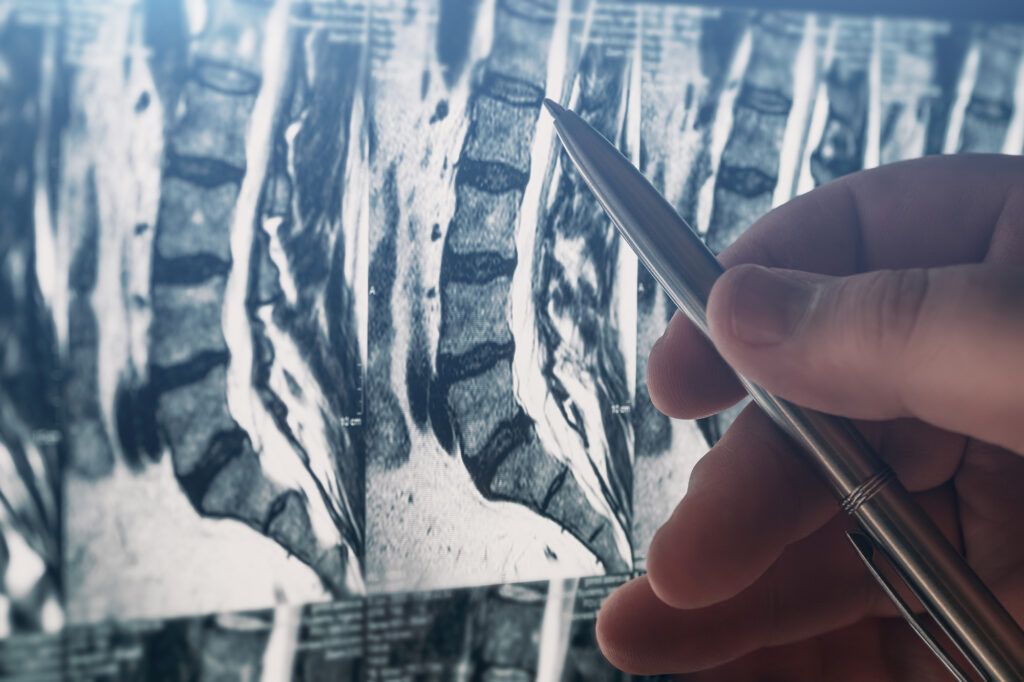
If additional evaluation is needed, an MRI of the lumbar spine may be used to assess discs, nerves, and areas of compression. Other testing, such as nerve studies, may be recommended in select cases.
Treatment Options
Many patients improve with conservative treatment. Depending on your symptoms and diagnosis, treatment may include:
At Fortera Health, we focus on identifying the true source of your pain rather than treating imaging findings alone. Our team combines advanced diagnostics and personalized treatment strategies to help patients reduce pain, improve movement, and return to the activities that matter most.