
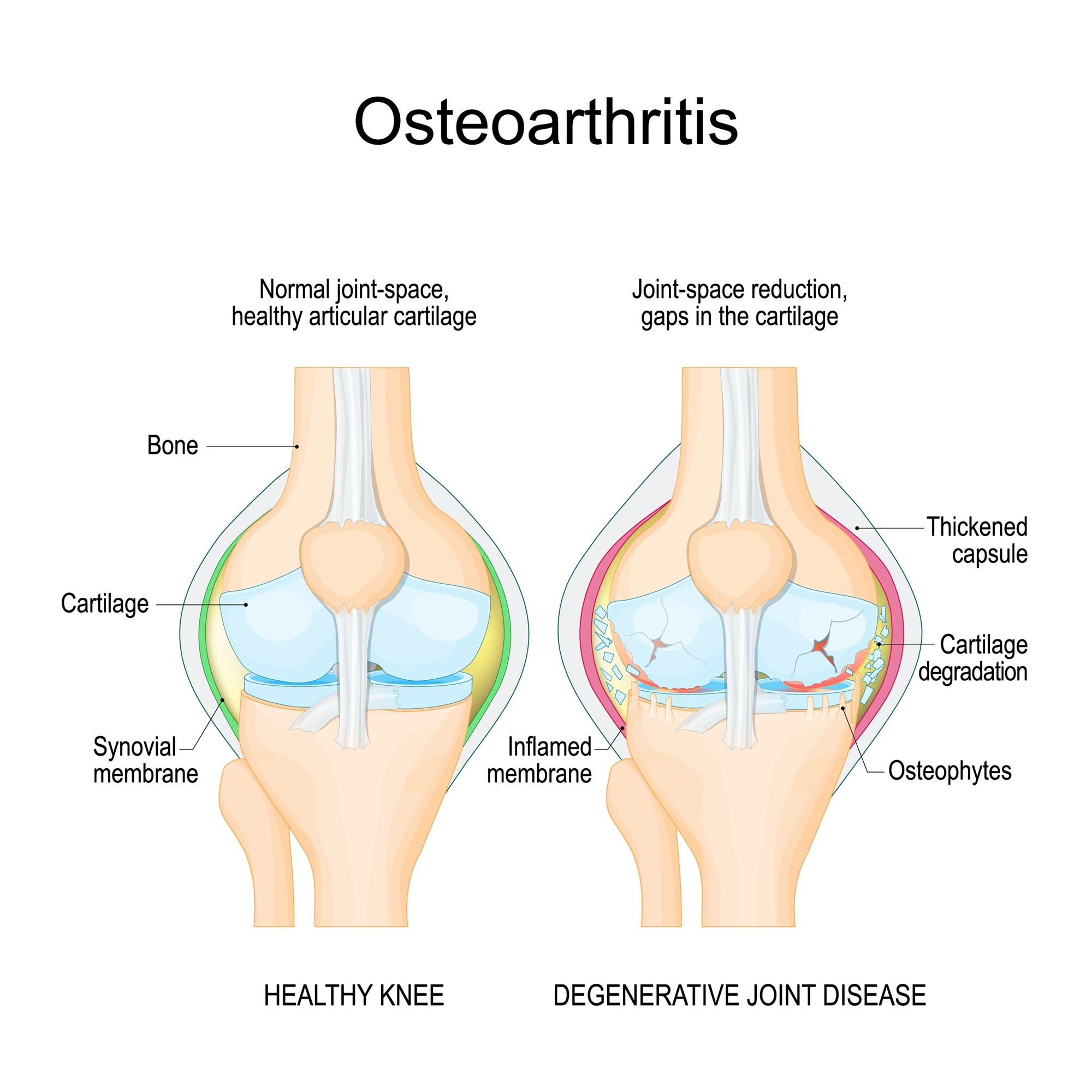
Joint degeneration, also known as osteoarthritis (OA) or degenerative joint disease, is the most common form of arthritis. It occurs when the tissues within a joint gradually break down, affecting not only cartilage but also the surrounding bone, lining of the joint, and supporting structures. Over time, these changes can lead to pain, stiffness, reduced mobility, and difficulty performing everyday activities.
Osteoarthritis most commonly affects weight-bearing joints such as the knees, hips, and spine, but it can also occur in the hands, shoulders, and other joints.


Common Symptoms
Symptoms of joint degeneration often develop gradually and may fluctuate over time. Common signs include:
Why It Happens
Osteoarthritis is not simply a result of “wear and tear.” It is a complex process involving changes throughout the entire joint.
Over time, factors such as aging, previous injuries, genetics, excess joint stress, and metabolic conditions can disrupt the balance between joint repair and breakdown. This can lead to:
Common risk factors include:
Diagnosis
Osteoarthritis is usually diagnosed through a combination of symptoms, medical history, and physical examination.
Your provider will evaluate:
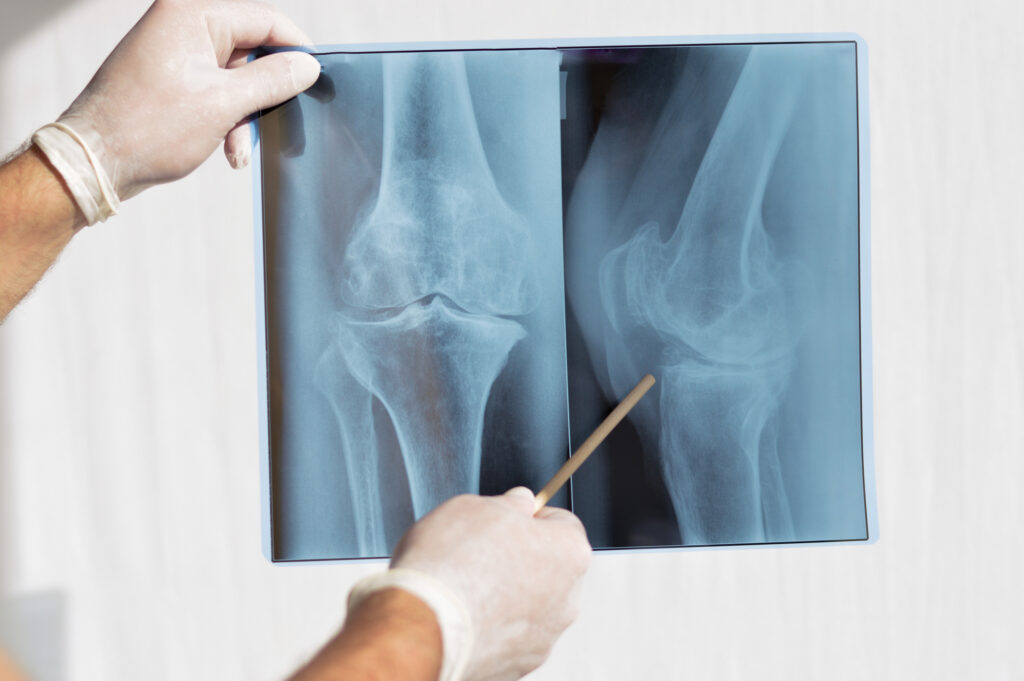
Imaging, such as X-rays, may be used when needed to evaluate joint changes or confirm the severity of degeneration. MRI is generally reserved for situations where additional evaluation is needed.
Treatment
While there is currently no treatment that completely reverses joint degeneration, many options can reduce pain, improve mobility, and help patients remain active.
Non-Surgical Treatment Options
Treatment often begins with conservative approaches, including:
Medications and Procedures
Depending on the severity of symptoms, treatment may include:
Surgical Options
For advanced osteoarthritis causing significant pain and loss of function despite other treatments, joint replacement surgery may be considered.
Living With Joint Degeneration
Osteoarthritis is a long-term condition, but symptoms can often be managed effectively with the right treatment plan. Early evaluation, maintaining strength and mobility, and addressing contributing factors can help reduce pain and preserve function.
At Fortera Health, our approach focuses on identifying the source of joint pain and creating an individualized treatment plan designed to help patients move better and maintain their quality of life.